

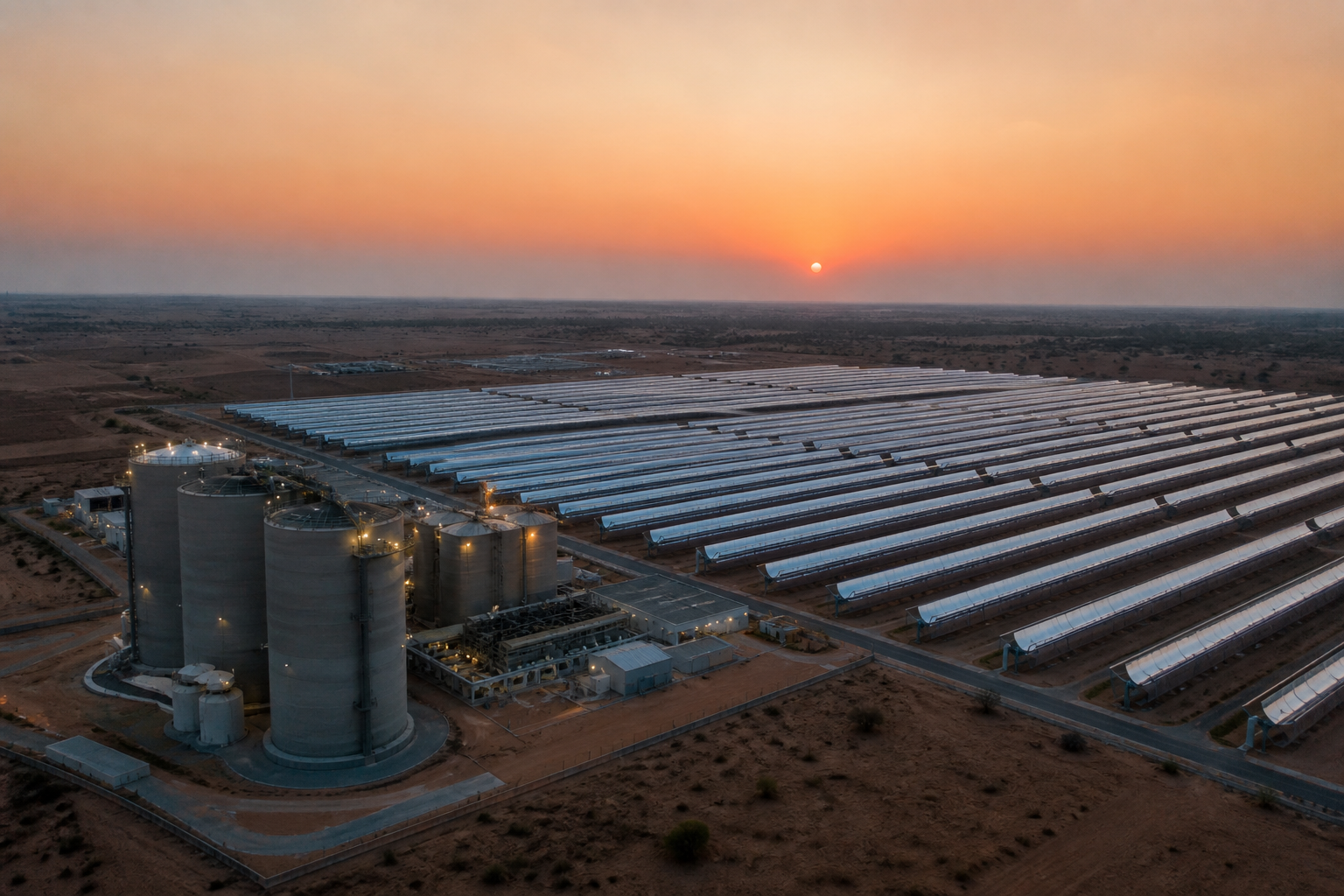
In the late afternoon heat outside Jaisalmer, a row of parabolic troughs still tracks the sun while three pale silos throw long shadows across the sand. The plant is not making extra electricity for the grid. It is trying to keep today's sunshine useful at 11pm, when air-conditioners in nearby towns are still running and rooftop panels have gone dark.
The idea is blunt on purpose. Air is blown through a ceramic heat exchanger until a bed of ordinary silica sand inside an insulated cylinder sits well above 500C. After dusk, the same loop runs in reverse: the sand gives the heat back, a small turbine or an absorption chiller does the rest, and the town draws power or cooling without waiting for a lithium shipment. Engineers on the site say sand is cheap, local, and hard to set on fire. The hard part is keeping the heat in the silo overnight without losing the economics to insulation and fans.
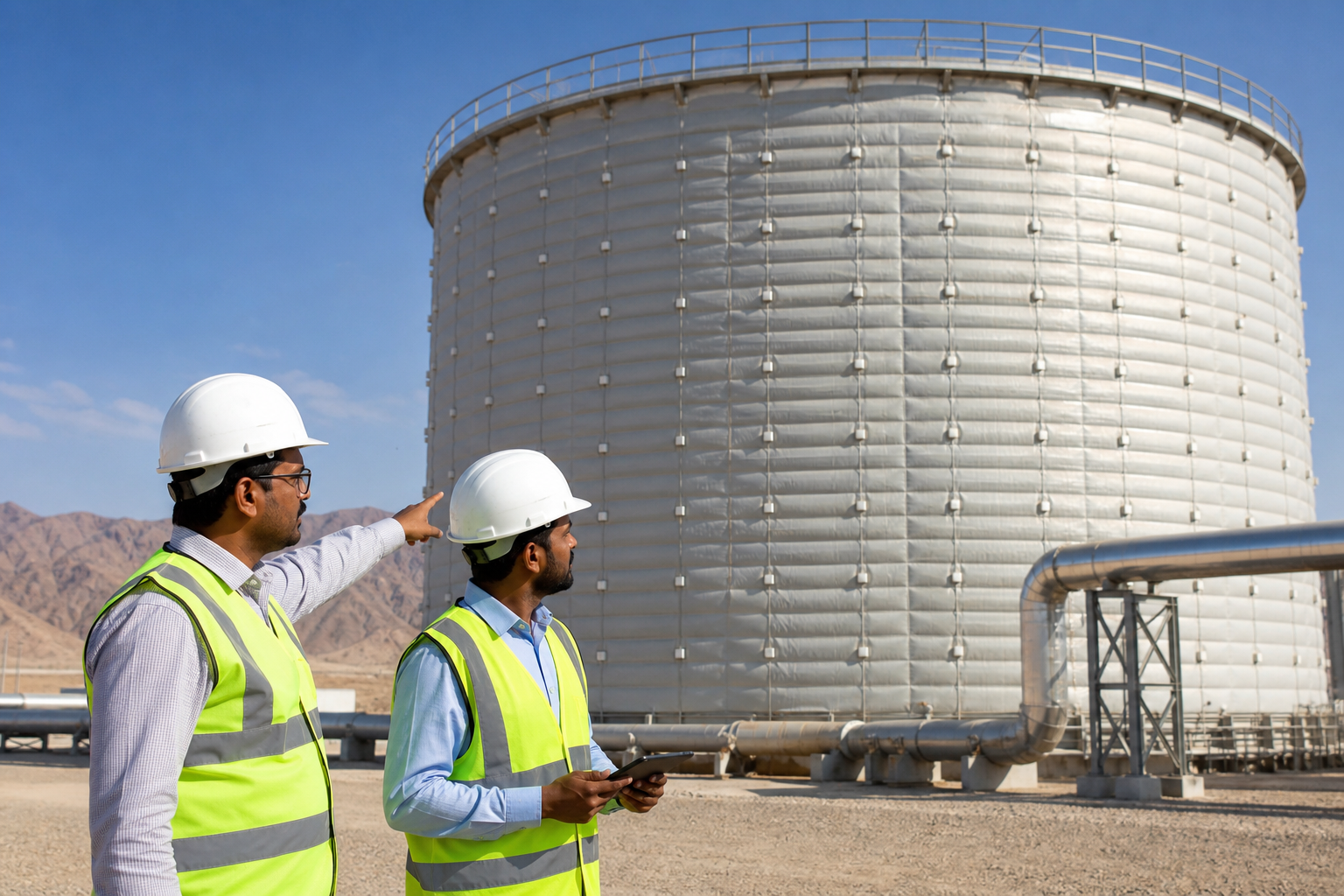
Walk the service gantry and the experiment looks less like a science-fair poster and more like a cement works. Thermocouples stitch the silo wall. A crew in hard hats checks flanges that have already been retorqued twice this week after the first full-temperature cycle. Dust still finds every seal. That is the point of the pilot: prove the hardware can survive a desert summer before anyone promises a municipal night tariff.
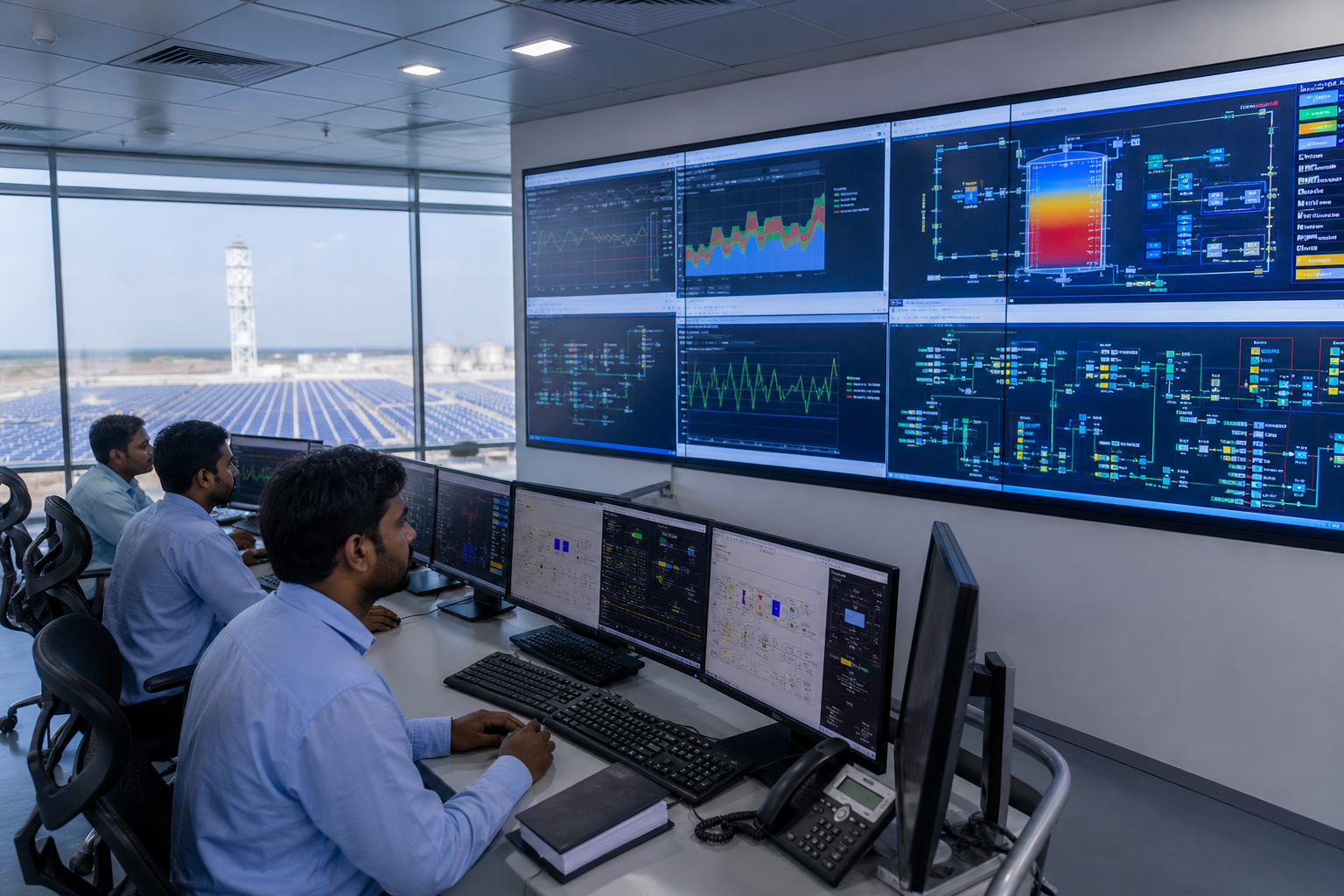
Inside the control room, screens show the sand bed temperature falling in a shallow curve rather than a cliff. Operators talk about round-trip efficiency the way other plants talk about megawatts. They are not claiming a replacement for batteries that must answer in milliseconds. They are asking a narrower question: can a desert town bank heat for six quiet hours, at a cost a municipality will actually sign? The next three months of night runs are meant to answer that, in public, with the meters still attached.